


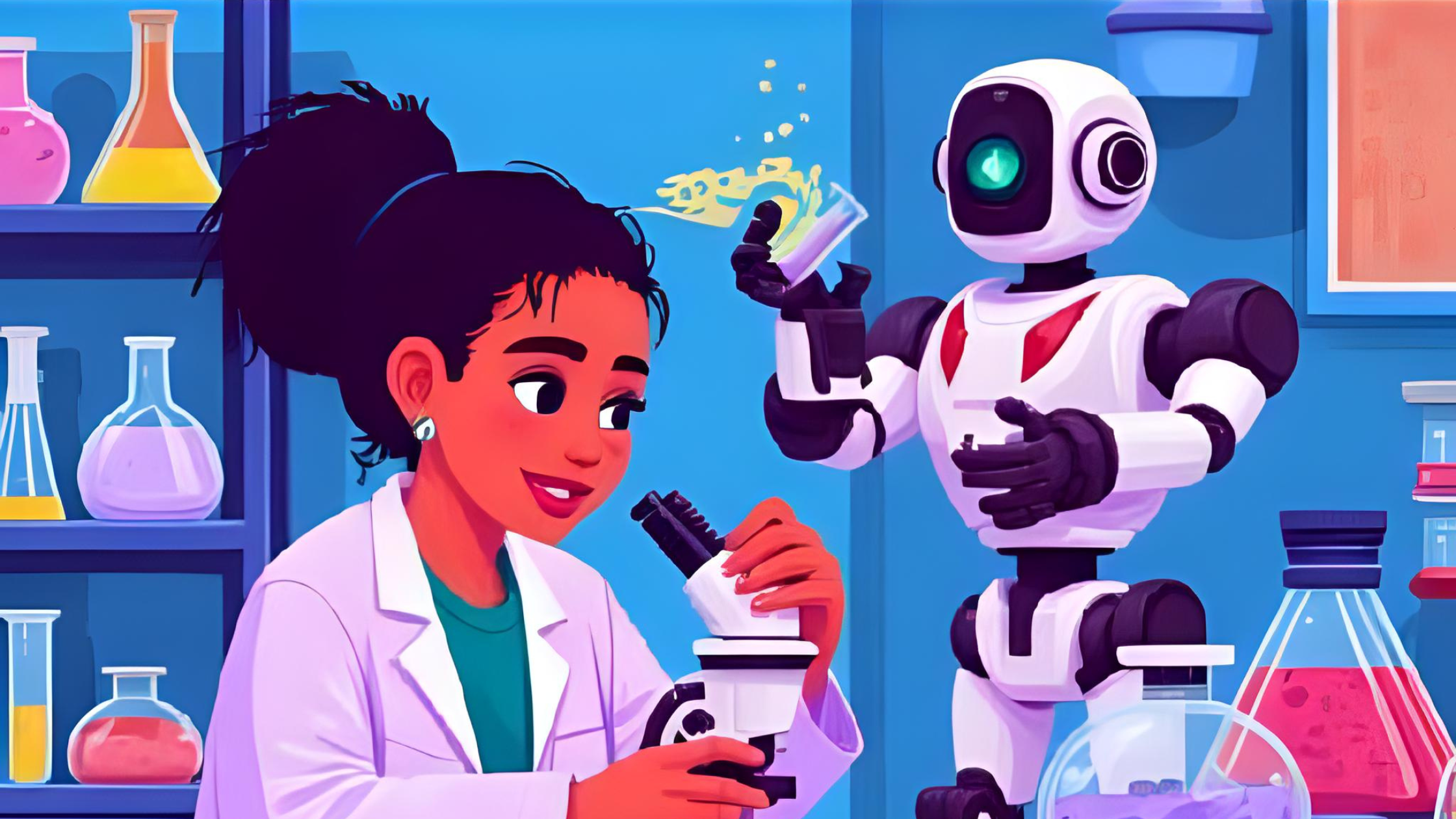
The Scientific Literature Problem Nobody Talks About at Parties
Here is a number worth sitting with: researchers at Cornell analyzed preprints from arXiv and bioRxiv (plus SSRN for social sciences) and found that scientists who appeared to adopt large language models posted roughly one-third more papers on arXiv, and more than 50% more on bioRxiv and SSRN, compared to similar scientists not using AI tools. That is not a small productivity nudge. That is a structural change in how fast science moves.
And yet, if you run a small business, you might be wondering why any of this matters to you. Fair question. The short answer is that the same class of AI tools reshaping academic research is already sitting in your browser and your inbox. Understanding what these systems can actually do, where they fall short, and why serious scientists are both excited and nervous about them gives you a much clearer picture of what you are really working with when you open ChatGPT to draft a proposal or summarize a competitor's pricing page.
So let's start where the scientists are, then connect it back to your business. The lessons from the lab bench translate more directly than you might expect.
What "ChatGPT-Like AI" Actually Means (Without the Jargon)
Large language models, or LLMs, are neural networks trained on enormous amounts of text and code. The training process teaches them to predict what comes next in a sequence, which sounds simple until you realize that doing it well across billions of examples produces a system that can summarize a 40-page paper, write functional Python, explain a molecular mechanism, or draft a client email in a specific tone. ChatGPT and similar generative AI systems are the consumer-facing versions of these models, aligned through additional training to be useful conversation partners rather than raw text predictors.
What makes the current generation different from earlier AI tools is the breadth. A previous generation of AI was narrow: one model for image classification, a separate one for translation, another for protein folding. Frontier models like GPT-5 can move fluidly across domains, connecting a concept from materials science to a technique from computational biology without being explicitly programmed to do so. That cross-domain synthesis is exactly what makes them interesting to researchers, and exactly what makes them useful to a business owner who needs to think across finance, operations, and marketing without losing the thread between them.
One thing worth being clear about: these models are not autonomous. OpenAI's own science team emphasizes that GPT-5 does not run projects or solve scientific problems on its own, and that expert oversight remains essential. Stanford's Human-Centered AI program makes the same point: the right mental model is "collaborator whose outputs need verification," not "replacement for the person doing the thinking." That framing matters whether you are a molecular biologist or a boutique marketing agency owner.
How Scientists Are Actually Using These Tools
The research workflow has several distinct stages, and AI is making a measurable difference at almost every one of them. It is worth walking through each, because the parallels to business workflows are surprisingly direct.
Finding What You Do Not Know You Are Looking For
Before you can design an experiment, you need to know what has already been tried, what failed, and what a neighboring field might have quietly solved two years ago. Traditionally this means keyword searches in databases, following citation trails down rabbit holes, and hoping you surface the right paper before a reviewer tells you that you missed it. Not exactly a confidence-inspiring process.
OpenAI's early experiments with GPT-5 in scientific domains point to a capability they call "conceptual literature search," where the model identifies deeper relationships between ideas and surfaces relevant material across languages and less accessible sources. Researchers reported finding references and connections they had not previously known about, including work from fields they would not have thought to search.
A Cornell study on AI's impact on scientific publishing looked at this from a slightly different angle, examining AI-augmented search tools. The finding was that AI-based search was better at surfacing newer publications and relevant books compared to traditional database search, which tends to favor older, heavily cited work. In other words, the rich get richer in traditional search; AI tools are at least somewhat better at finding the less obvious stuff.
For a business owner, the equivalent is market research. How much time do you spend trying to figure out what competitors are doing, what your customers are actually complaining about in reviews, or what regulatory changes might affect your industry? The same conceptual search capability that helps a biologist find a paper from 2019 that changes their hypothesis can help you find a trend you did not know to look for.
From Summarizing to Actually Thinking
The step that surprises most people is hypothesis generation. It is one thing for an AI to summarize existing knowledge; it is another for it to propose something new. A review in a peer-reviewed journal on generative AI in scientific writing notes that LLMs like ChatGPT can help generate hypotheses and flag potential confounders when guided by domain experts. The key phrase there is "guided by domain experts." The AI is not doing this in a vacuum; it is doing it in conversation with someone who knows enough to evaluate what comes back.
Stanford HAI describes modern AI systems as capable of generating hypotheses, designing experiments, and proposing new research directions when embedded in rich data environments. That last part matters: the quality of what comes out scales with the quality of context you put in.
OpenAI reports that in biology and other empirical sciences, researchers have used GPT-5 to propose mechanisms for observed phenomena and design experiments to validate them in the lab. The characterization from OpenAI's science team is that the model has moved beyond restating known knowledge toward "meaningfully assisting" in advancing it, under expert oversight.
For anyone running a business, this maps onto strategic planning. Feeding your actual sales data and competitive landscape into a well-prompted AI session and asking it to identify patterns or propose approaches you have not tried is not science fiction. It is a version of exactly what these researchers are doing.
The Antibiotic That Made Headlines (and When It Actually Happened)
No discussion of AI-enabled scientific discovery would be complete without the MIT halicin story, and no discussion of it should get the date wrong. The original study was published in February 2020, not 2023. Researchers trained a deep learning model on molecular structures and their properties, then used it to screen a library of about 6,000 compounds. The model identified halicin, a molecule with a mechanism of action that bacteria had not developed resistance to, in a fraction of the time traditional screening would have required. The name is a nod to HAL 9000, because scientists are exactly as nerdy as you suspect.
The significance was not just the speed. Traditional drug discovery costs and timelines have long been a bottleneck in biomedical research, and the halicin work demonstrated that AI could meaningfully compress the early screening phase. The model surfaced a candidate that human researchers had passed over because it did not look like existing antibiotics. That is the cross-domain pattern recognition at work: the AI was not constrained by what antibiotics were supposed to look like.
UC San Diego has documented a broader set of AI-enabled biomedical breakthroughs, including AI tools that helped uncover a potential trigger for Alzheimer's disease, systems that improved tuberculosis diagnosis and treatment strategies, and applications in cardiology and oncology. These are not all LLM-based; many use other forms of machine learning. But the generative AI layer is increasingly being added on top, providing the interface through which researchers interact with these systems and interpret results.
Mathematics: Where AI Crossed a Line Nobody Expected
If you want the most philosophically interesting application of LLMs in science, look at mathematics. Proofs are either right or wrong; there is no partial credit, and you cannot fake it with confident language. That makes math a clean test case for whether AI is genuinely reasoning or just producing plausible-sounding output.
OpenAI's case studies report that GPT-5 has helped mathematicians generate viable proof outlines in minutes for work that might otherwise have taken days or weeks. More striking, the model has reportedly proven results that humans had not yet discovered, including things that were within human reach but had not been reached yet. OpenAI's Head of Science has described these as "existence proofs" that GPT-5 can move past the frontier of known human knowledge on some problems, when guided by experts.
Mathematics works as a proving ground because feedback is fast and unambiguous. A proof can be checked mechanically. Success in math suggests that LLMs may contribute genuinely novel ideas in other domains where automated checking is possible, including simulation-heavy fields like materials science and computational biology.
Writing Faster, and the Catch
This is where the quantitative evidence is strongest, and where the story gets complicated. The Cornell study found that scientists who appeared to adopt LLMs posted substantially more papers across multiple preprint servers. The productivity gain was real and large. But the same study notes that journal editors are now reporting an influx of "well-written papers with little scientific value." More papers, not necessarily better science.
The disproportionate beneficiaries, according to the same research, are scientists whose first language is not English. Researchers from Asian institutions posted between 43% and 89.3% more papers after adopting LLMs, depending on the preprint server. Generative AI effectively functions as both editor and translator, helping these scientists produce polished manuscripts without the language barrier that previously slowed them down. That is a genuine equity gain for global science.
The lesson for business owners is the same one the journal editors are learning: AI makes production faster, but it cannot fix weak underlying thinking. A well-written proposal built on a flawed strategy is still a flawed strategy. The tool raises the floor on execution; it does not automatically raise the ceiling on substance.
AI and Automation: When the Robot Does the Experiment Too
LLMs are not the only AI story in science, and they work best when combined with other systems. Lawrence Berkeley National Laboratory has built infrastructure that links supercomputing, robotics, and experimental facilities so that AI models can help decide what experiments to run next based on prior data, while robotic systems physically execute those experiments with minimal human intervention. Berkeley Lab describes this combination as beginning to "reshape how science is done" across materials discovery and other data-intensive fields.
This is the end state that the LLM productivity gains are pointing toward: not just faster writing or better literature search, but a semi-automated research loop. AI proposes, robots execute, and humans set the direction at a level above the routine. The LLM layer is the interface that makes the whole system legible to human researchers who are not themselves roboticists or supercomputing specialists.
For small businesses, the analog is workflow automation. The AI tools you use to draft emails or summarize reports are the same generation of technology that, in a research context, is coordinating robotic labs. The underlying capability is the same; the application is scaled to your context.
The Part Nobody Wants to Talk About: AI Slop and Quality Control
Science has a reproducibility problem that predates AI. Studies suggest that a significant share of published research findings are difficult or impossible to replicate, a challenge documented across psychology and medicine for over a decade. AI does not fix this. In some ways, it makes it worse, and the mechanism is almost funny: the models are so good at sounding authoritative that the bad output is harder to spot than the bad output of a tired grad student.
The Cornell research is blunt about this: the productivity gains from LLMs come "at the cost of too many mediocre papers." Hallucinated citations are a real problem. A model that confidently produces a citation to a paper that does not exist is worse than no citation at all, because it wastes reviewer time and erodes trust. Editors and peer reviewers are now dealing with a higher volume of submissions that are polished enough to pass a quick read but lack genuine scientific contribution.
The peer-reviewed literature on generative AI in research frames this as a quality-control challenge that the scientific community is still working out. New norms around disclosure, new tools for detecting AI-generated content, and new reviewer guidelines are all being developed in real time. The community is essentially building the guardrails while the train is already moving.
For business owners, this is the most directly transferable lesson. The same dynamic plays out when you use AI to generate marketing copy or draft financial summaries. The output can be fluent and confident while being subtly wrong. The AI does not know what it does not know, and it will not flag its own uncertainty unless you specifically prompt it to. Human review is not optional; it is the whole point.
What This Means If You Run a Business (Not a Lab)
The scientists using these tools are dealing with the same fundamental tradeoffs you are: more output, faster iteration, lower barrier to producing polished work, and a new responsibility to verify what comes out. The research context just makes the stakes more legible, because a wrong result in a published paper has clear consequences.
A few things the science tells us that apply directly to how you use AI in your business:
Context quality determines output quality. The Stanford HAI framing of AI as a collaborator embedded in rich data environments applies to your work too. A vague prompt produces vague output. Feeding the AI your actual sales numbers, your specific customer segment, and your real constraints produces something worth reading.
The productivity gains are real, but uneven. The Cornell finding that non-native English speakers gained the most from LLM adoption suggests that the tool's value scales with the friction it removes. If writing is a bottleneck for you, the gain is large. If writing is already easy and your bottleneck is decision-making or relationships, the gain is smaller.
Volume is not the same as value. Cranking out more proposals or more content faster is only an advantage if the underlying thinking is sound. The journal editors dealing with well-written but empty papers are a useful warning. AI can help you execute more quickly; it cannot substitute for knowing what you actually want to say.
Verification is your job now. OpenAI is explicit that expert oversight remains essential even for their most capable models. That is not a caveat buried in fine print; it is the actual design of how these systems are meant to be used. If you are sending AI-generated content to clients without reviewing it, you are skipping the step that makes the tool safe to use.
The Berkeley Lab model, where AI and automation handle the routine and humans set the direction, is probably the right mental model for a small business too. Use the AI for drafting and pattern-spotting. Keep your attention on the decisions that require judgment and accountability. That division of labor is where the actual productivity gain lives.
The Honest Summary
Scientists are using ChatGPT-like AI to speed up literature review, write code, and produce papers faster than before. Some are producing genuinely novel results, including new mathematical proofs and biomedical insights that would have taken much longer through traditional methods. The productivity gains are documented and large, particularly for researchers who previously faced language barriers.
The costs are also real. More output has meant more mediocre output. Hallucinated citations and AI-assisted papers with little scientific value are now a documented problem that the research community is actively trying to address. The tools are powerful and the guardrails are still being built.
For you, running a business in 2026, the technology is the same one sitting in your browser right now. The Cornell study found output gains of 33% to over 50% for researchers who adopted LLMs. The Stanford HAI team found that the models work best when a domain expert is in the loop, setting direction and checking results. The Berkeley Lab found that the biggest wins came from pairing AI with human judgment, not from replacing one with the other. Coffee keeps you awake. A well-used AI tool keeps your thinking moving. Neither one does the thinking for you, and the scientists figured that out the hard way so you do not have to.
Sources
Early experiments in accelerating science with GPT-5 (OpenAI) — supports claims about GPT-5's conceptual literature search, hypothesis generation, experiment design, and proof-generation capabilities under expert oversight.
How AI is accelerating scientific discovery today and what's ahead (OpenAI) — source for OpenAI's Head of Science describing GPT-5 as capable of moving past the frontier of known human knowledge on select problems.
AI gives scientists a boost, but at the cost of too many mediocre papers (Cornell University) — source for the paper-output productivity data showing 33–50% increases across preprint servers, the disproportionate gains for non-native English speakers, and the quality-control concerns raised by journal editors.
ChatGPT in science and research: How generative AI drives discovery (ScienceDirect) — supports the discussion of AI-augmented literature search, including findings that AI-based search surfaces newer publications more effectively than traditional database search.
How AI is transforming scientific discovery while keeping humans at the center (Stanford HAI) — supports the framing of AI as an autonomous collaborator requiring human validation, and the emphasis on embedding AI in rich data environments for hypothesis and experiment work.
Nine breakthroughs made possible by AI (UC San Diego Today) — source for AI-enabled biomedical discoveries including Alzheimer's disease research, tuberculosis treatment, and applications in cardiology and oncology.
ChatGPT and generative AI are revolutionizing the scientific process (PMC / National Library of Medicine) — supports the overview of LLM capabilities in research writing and editing, reproducibility challenges, and the quality-control issues facing peer review.
How AI and automation are speeding up science and discovery (Lawrence Berkeley National Laboratory) — source for Berkeley Lab's integrated AI-robotics-supercomputing infrastructure and its application to materials discovery and data-intensive research fields.
.svg)