


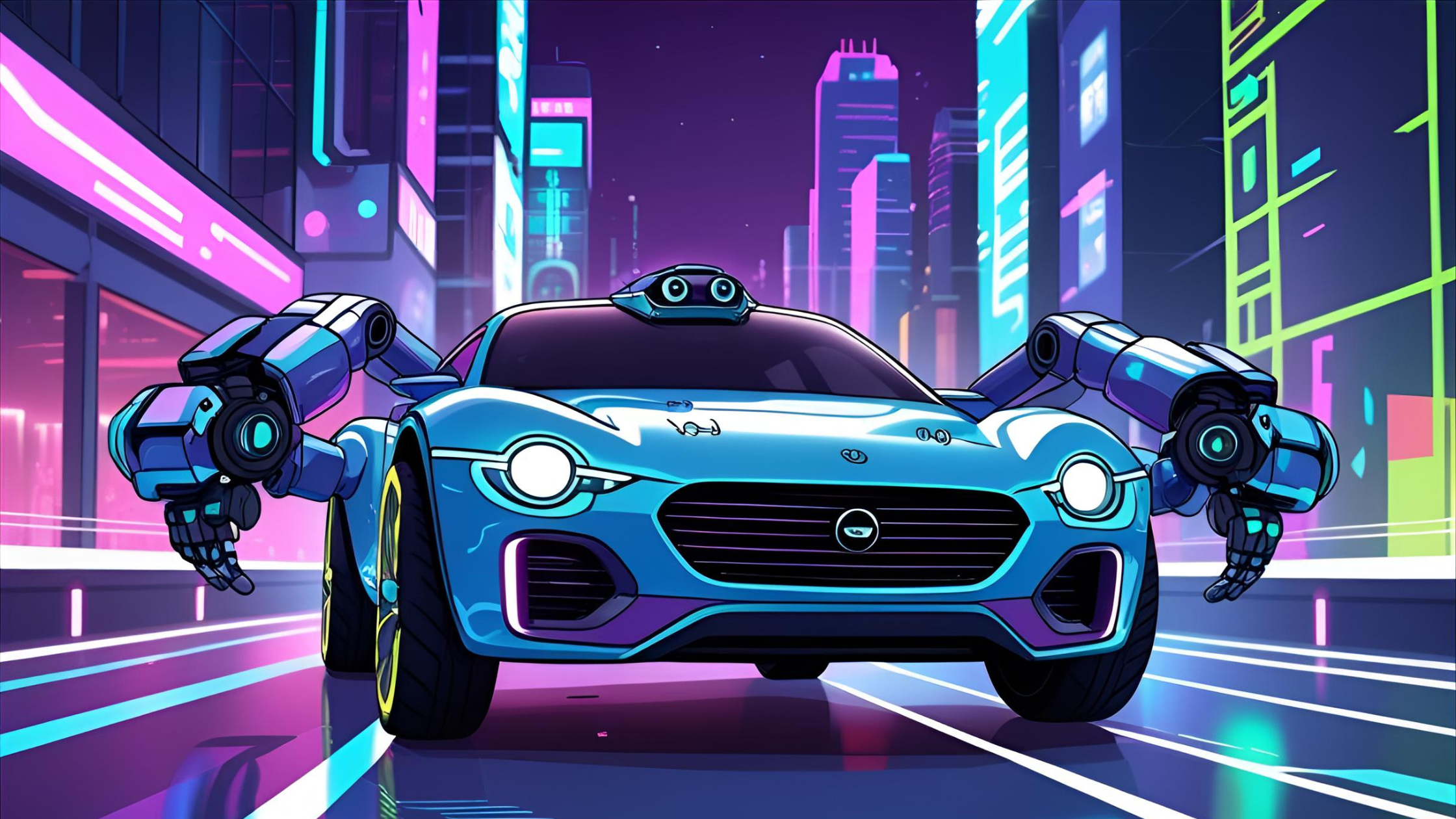
The Real Breakthrough in Self-Driving Cars Isn't the Brain. It's the Body.
For most of the past decade, the public conversation about self-driving cars has fixated on artificial intelligence: the neural networks, the training data, the machine learning models smart enough to read a stop sign in the rain. That framing isn't wrong, exactly. It's just incomplete. The engineers actually building these systems will tell you that the harder problem, the one that keeps roboticists up at night, is physical. How do you build a vehicle body capable of perceiving the world accurately enough, and acting on those perceptions fast enough, that the software can do its job safely at sixty miles an hour?
That question is what this post is actually about. Self-driving cars are not, at their core, cars with clever software bolted on. The ones that work are purpose-built mobile robots, and their physical architecture, sensors, compute, actuators, redundancy systems, and chassis integration, is what separates a working autonomous platform from an expensive demo that panics at a construction cone.
If you run a small business and you're thinking "why should I care about this?"" fair question. The answer is that autonomous systems are already reshaping last-mile delivery logistics, commercial fleet operations, and the cost structure of transportation services that small businesses depend on. Understanding how the hardware actually works helps you cut through vendor hype and make smarter decisions about the tools and partners you choose.
From Driver-Assist to Robot Body: How We Got Here
Cars have had computerized assistance features for decades. Anti-lock brakes, electronic stability control, adaptive cruise control, lane-keep assist. These are real engineering achievements, but they share a design philosophy: a human is in charge, and the computer helps at the margins. The software intervenes, then hands control back.
Full vehicle autonomy requires a completely different architecture. The system must perceive the environment continuously, build a model of what's happening around the car, plan a path through it, and physically execute that plan, all without a human ready to grab the wheel. That means the vehicle needs enough sensing coverage to see in every direction at once, enough compute to process all that data in real time, and enough mechanical redundancy that a single component failure doesn't turn into a crash.
Researchers in the field describe the autonomy stack as a layered system: sensors collect environmental data, software fuses and interprets it, onboard compute runs perception, prediction, and planning, and actuators convert those decisions into steering, acceleration, and braking. Every layer depends on the one below it. If your sensors can't see clearly in direct sunlight, no amount of machine learning compensates. If your actuators can't execute a steering correction within milliseconds, the best path-planning algorithm in the world is irrelevant.
This is why the industry's real progress over the past several years has been as much about systems engineering as it has been about AI research. Better sensor placement, smarter redundancy design, tighter hardware-software co-design: these are the unglamorous advances that have moved autonomous vehicles from closed-track demos to actual public roads.
What's Actually Inside a Self-Driving Car
Pop the hood on the autonomy stack and you find several distinct hardware categories, each with its own engineering challenges.
Sensors: The Vehicle's Senses
Modern autonomous vehicles rely on a combination of cameras, radar, LiDAR, ultrasonic sensors, inertial measurement units, and GPS. Each modality has strengths and weaknesses, which is precisely why you need all of them.
Cameras are cheap and high-resolution, but they struggle in low light and can be blinded by glare. Radar sees through rain and fog and measures velocity well, but its spatial resolution is limited. LiDAR (Light Detection and Ranging) builds precise three-dimensional point clouds of the surrounding environment and is excellent for object detection, but it's expensive and can degrade in heavy precipitation. Ultrasonic sensors handle close-range detection for parking and low-speed maneuvering. IMUs track the vehicle's own motion, acceleration, and orientation, which matters enormously when GPS signal is weak or interrupted.
The insight here is that no single sensor is sufficient. A self-driving car that relies only on cameras, for example, is one dirty lens away from a serious problem. Sensor fusion, combining data from multiple modalities into a coherent picture of the world, is what gives the system resilience. It's also why sensor placement matters so much: gaps in coverage create blind spots that software cannot fill.
Onboard Compute
Processing the firehose of data from a full sensor suite in real time requires substantial computing hardware. High-performance onboard computers run perception, prediction, and planning continuously, typically on specialized chips designed for parallel processing of sensor data. This compute hardware has to work reliably across a wide temperature range, survive road vibration, and draw power efficiently enough that it doesn't drain the vehicle's battery or generate so much heat that it throttles itself.
Thermal management is a real engineering problem that rarely makes headlines. A compute module that works perfectly in a climate-controlled lab can behave unpredictably in a car sitting in direct sunlight in Phoenix in July. Getting the cooling right is part of building a vehicle body that works in the real world rather than just in ideal conditions.
Actuators: Turning Decisions into Motion
This is the part that actually moves the car. Steering, throttle, brake, and transmission systems must be controllable by the autonomy software, which means they need electronic interfaces that can accept commands from the onboard computer and execute them with precision and speed. Drive-by-wire systems, where traditional mechanical linkages are replaced or supplemented by electronic controls, are central to this.
The latency between a software decision and a physical action matters enormously at highway speeds. A vehicle traveling at sixty miles per hour covers about ninety feet per second. A delay of even a few hundred milliseconds in executing a steering correction is the difference between a safe lane change and a collision. This is why actuator design and the communication architecture between compute and actuators are active areas of engineering investment.
Redundancy and Fail-Safe Design
Perhaps the least glamorous but most important element of a robot body is what happens when something goes wrong. Autonomous vehicle platforms require backup power systems, fallback braking and steering paths, and multiple sensing modalities specifically to reduce the risk of a single-point failure becoming a crash.
This is a fundamentally different engineering philosophy from conventional cars, where a single brake line failure is a serious but survivable problem because a human driver can compensate. In a fully driverless vehicle, the machine itself must detect the failure and execute a safe response, whether that's pulling over, slowing to a stop, or switching to a backup system, without human intervention. Designing for that kind of graceful degradation requires redundancy at every critical layer of the physical system.
Waymo: What an Integrated Robot Body Looks Like at Scale
Waymo is the clearest current example of what it looks like when a company designs the vehicle body around autonomy from the start rather than adapting an existing production car. Waymo describes its Driver system as "a single integrated system of sensors and compute designed to work together," and says the Waymo Driver is "always in control from pickup to destination."
That language is worth paying attention to. "Integrated" and "designed to work together" are not marketing filler. They describe a real engineering choice: building the sensor suite, compute platform, and vehicle chassis as a unified system rather than adding autonomy hardware to a car designed for human drivers. The sensor pods on a Waymo vehicle are positioned specifically for the coverage the software needs. The compute is sized for the sensor load the vehicle actually carries. The whole thing is co-designed.
Waymo's robotaxi service operates commercially in a small number of cities. Fully driverless ride-hailing is still limited to roughly a half-dozen cities in the United States, which tells you something important: even the most advanced integrated robot body in commercial deployment requires a carefully controlled operating environment. Waymo vehicles operate in well-mapped areas under defined conditions. That's not a criticism; it reflects an honest engineering reality about what the current generation of hardware can reliably handle.
General Motors Super Cruise: The Other Model
Not every automaker is building fully driverless robot bodies. General Motors has taken a different approach with Super Cruise, and it's instructive to understand why.
GM describes Super Cruise as hands-free driving technology that keeps the driver eyes-on-road and able to monitor the vehicle, available across 23 vehicles spanning several of its brands. That's a significant commercial footprint, but the key word is "hands-free," not "driverless." Super Cruise handles highway driving under defined conditions, but a human driver remains responsible and must be able to take over.
This represents a different point on the autonomy spectrum, and a different robot body design philosophy. Super Cruise vehicles don't need the same level of sensor redundancy or fail-safe architecture as a fully driverless platform, because the human is still in the loop. The hardware is sophisticated, but it's designed to assist rather than replace the driver's judgment and physical presence.
The contrast between Waymo and Super Cruise is useful for anyone trying to understand what "self-driving" actually means in practice. The autonomy spectrum runs from lower-level driver assistance, where the human remains responsible, through partial automation requiring human supervision, all the way to fully driverless operation within a defined operating domain. Most commercially available technology in 2026 sits closer to the Super Cruise end of that spectrum than the Waymo end.
Delivery Robots: Where Autonomy Is Moving Fastest
If you want to see autonomous robot bodies gaining real commercial traction right now, look at delivery rather than passenger transport. Sidewalk delivery robots and small autonomous delivery vehicles operate in constrained environments, at low speeds, on routes that are easier to map and manage than open highway driving. That combination makes the engineering problem significantly more tractable.
Research published by UC Berkeley's California Management Review in 2022 noted that self-driving delivery robots are already being used in local delivery contexts and can shift last-mile delivery off main roads onto sidewalks. The same analysis cited McKinsey estimates suggesting delivery robots could reduce last-mile delivery costs by around 40 percent, though those figures depend heavily on deployment scale and local operating conditions.
For small-business owners, this is arguably the most immediately relevant part of the autonomous vehicle story. Last-mile delivery is one of the most expensive components of e-commerce and food service logistics. If autonomous delivery platforms continue to mature and costs come down, the economics of running a delivery operation change materially. Companies that understand the technology early will be better positioned to evaluate partnerships, negotiate contracts, and make capital allocation decisions when these options become available in their markets.
The reason delivery robots are advancing faster than consumer autonomous cars comes back to the robot body problem. A sidewalk robot traveling at four miles per hour in a geofenced neighborhood has a much simpler sensing and actuation challenge than a vehicle doing seventy on an interstate. Simpler challenge means cheaper hardware, faster iteration, and more reliable operation. The autonomy stack is the same in concept; the physical demands are dramatically lower.
Why the Hardware Limits Matter More Than the Hype
One of the most persistent misconceptions about self-driving cars is that the remaining problems are software problems. Get the AI smart enough, the argument goes, and the cars will work everywhere. The engineering reality is more complicated.
Physical limits are real limits. Bad sensor placement, glare, occlusion, dirty lenses, weather, and vibration all degrade perception performance in ways that software cannot fully compensate for. A LiDAR unit covered in road grime sees less. A camera facing into a low winter sun sees less. A radar system near a highway overpass can produce spurious reflections. These are hardware and physics problems, not algorithm problems.
The Union of Concerned Scientists has noted that many deployed systems work only in geofenced, well-mapped, or favorable weather conditions, which is a direct consequence of these physical limits. The "operating design domain" of an autonomous vehicle, the set of conditions it's been validated to handle, is shaped by what its sensors can reliably perceive and what its actuators can reliably execute. Expanding that domain requires hardware improvements, not just software updates.
Edge cases remain the hardest problem. Unusual road users, active construction zones, emergency vehicles running against traffic, flooded intersections, and damaged signage are all situations where sensor fusion systems can struggle. These scenarios represent genuine structural challenges for current sensing and prediction methods, not just bugs to be patched. Honest coverage of autonomous vehicles has to acknowledge this, because the vendors often don't.
The Safety Case: Why These Systems Can Be Safer Than a Human in Defined Conditions
Here's the thing about autonomous vehicle safety that often gets lost in the Skynet jokes: in specific, well-defined operating conditions, a properly engineered robot body has real structural advantages over a human driver.
Humans get tired. Humans get distracted. Humans misjudge distances, react slowly after a long day, and make catastrophically bad decisions when impaired. An autonomous system with a well-designed sensor suite and redundant hardware does none of those things. These systems combine multiple sensors, continuous perception, fast control loops, and software that never gets fatigued or impaired. In a controlled environment, on well-mapped roads, under conditions the system has been validated for, that's a genuine safety advantage.
Waymo's system is designed to be always in control and always attentive in a way no human driver can sustain across a long shift. That's not a marketing claim; it's a description of what continuous sensor fusion and automated control loops actually provide.
The safety argument becomes much weaker when you push outside the operating design domain. An autonomous vehicle asked to handle conditions it wasn't designed for, whether that's an unusual weather event, a novel road configuration, or an unpredictable human doing something genuinely unexpected, may perform worse than an experienced human driver. The safety case for autonomy is strong and specific, not broad and universal. That distinction matters.
Proving safety at scale is also genuinely hard. Validating that a robot body is safer than a human across billions of miles and countless scenarios requires either an enormous amount of real-world driving data or very sophisticated simulation, and the methodology for doing this rigorously is still an active area of research and regulatory debate.
The Economics Nobody Wants to Talk About
Technical capability and commercial viability are not the same thing. A robotaxi that works reliably in San Francisco still has to generate enough revenue to cover the cost of the hardware, the maintenance, the insurance, the regulatory compliance, and the fleet management overhead. Those numbers are not trivial.
The hardware in a fully autonomous vehicle platform is expensive. LiDAR units, high-performance compute modules, redundant braking and steering systems, and the engineering required to integrate them add substantial cost compared to a conventional vehicle. As production scales up and component costs fall, the economics improve, but the path from "technically feasible" to "economically compelling at consumer scale" is long and not guaranteed.
The delivery robot literature suggests cost savings are possible in constrained logistics applications, which is why that segment is moving faster commercially. For general consumer passenger autonomy, the economics remain unresolved. Some operators report meaningful cost reductions in specific fleet applications; broad consumer adoption depends on hardware costs falling further than they have so far.
For small-business owners evaluating autonomous delivery or fleet technology, the practical advice is: focus on total cost of ownership, not just the per-mile operating cost. Factor in maintenance, downtime, insurance premiums (which are still being figured out by the industry and regulators), and the cost of operating within the geographic and weather constraints of whatever platform you're evaluating. The pitch decks will show you the best case. Build your own model.
What Has to Happen Next
The current generation of autonomous vehicle hardware has real capabilities and real limits. Extending those capabilities requires progress on several fronts simultaneously.
Sensor costs need to continue falling. LiDAR in particular has dropped dramatically in price over the past several years, and that trend matters enormously for making autonomous platforms economically viable at scale. Compute efficiency needs to improve so that more processing power can be packed into smaller, cooler, cheaper modules. Redundancy architectures need to become more standardized so that fail-safe design doesn't require bespoke engineering for every new platform.
Regulatory frameworks are still catching up. Fully driverless operation is currently permitted in only a small number of jurisdictions, which limits commercial deployment regardless of what the hardware can do. Clearer standards for safety validation, liability, and operating domain certification would accelerate deployment by giving operators and insurers a shared basis for evaluation.
Better validation methods are probably the deepest long-term challenge. The industry needs ways to demonstrate that a robot body is safe across the full range of conditions it will encounter in the real world, not just the conditions it was tested in. That's a combination of simulation technology, real-world data collection, and regulatory methodology that is still being developed.
For the delivery robot segment specifically, the near-term trajectory looks more predictable. Constrained environments, lower speeds, and simpler operating domains mean that the hardware and software challenges are more manageable, and the economics are closer to working right now. Expect to see autonomous delivery expand in urban and suburban markets over the next several years as hardware costs fall and regulatory approvals accumulate.
What This Means If You Run a Business
You don't need to be an engineer to use this information productively. A few practical takeaways for small-business owners paying attention to this space:
When a vendor tells you their autonomous system "works everywhere," ask about the operating design domain. What roads? What weather? What speed range? What happens when the system encounters something outside those parameters? The answers will tell you whether you're looking at a mature product or an ambitious prototype.
Last-mile delivery is the segment most likely to affect small businesses in the near term. If you operate in logistics, food service, or retail with a delivery component, the economics of autonomous delivery platforms are worth tracking now, even if you're not ready to adopt them. Understanding the cost structure helps you evaluate whether a delivery partner's pricing reflects real efficiency gains or just optimistic projections.
The hands-free driver-assist technology in commercial vehicles, the Super Cruise class of systems, is already available and expanding. GM's Super Cruise is now available across 23 vehicle models, and comparable systems are offered by other manufacturers. If you run a fleet, these systems are worth evaluating for driver fatigue reduction and highway safety, with clear eyes about what they do and don't do.
If your team is starting to think seriously about AI and automation across your operations, not just in vehicles, the challenge of getting employees comfortable with AI tools is real and worth addressing proactively. The technology is only as useful as the people deploying it.
For businesses considering broader automation investments, the Handybots team offers digital transformation consulting that can help you figure out where automation actually makes sense for your specific operation, rather than where vendors want to sell it to you. Reach them at 415.231.1534 or info@handybots.ai.
The Actual Revolution, Explained Without the Jazz Hands
Self-driving cars have been "five years away" for about fifteen years now, which has made a lot of people appropriately skeptical. That skepticism is healthy. But it can obscure what has genuinely changed.
The real progress in autonomous vehicles is not that the AI has gotten mysteriously smarter. It's that the physical platforms have gotten substantially better engineered. Sensors are cheaper, more reliable, and better positioned. Compute is faster and more power-efficient. Actuator systems are more precise. Redundancy architectures are more mature. The integration between hardware and software is tighter.
Waymo's commercially operating robotaxi service exists not because someone wrote a brilliant algorithm, but because a team of engineers built a vehicle body capable of supporting that algorithm reliably in real-world conditions. GM's Super Cruise works on highways because the sensing hardware, the driver monitoring system, and the actuation controls were designed together to handle that specific operating domain. Delivery robots are gaining commercial traction because their simple operating environments make the hardware problem tractable enough to solve economically.
The systems that work are the ones where the robot body, the full physical stack from sensor to actuator, was designed with the operating domain in mind from the start. The ones that don't work are usually the ones where the software ambitions outran the hardware reality. That's the lesson the industry has been learning, sometimes expensively, for the past decade.
For anyone building a business, evaluating a vendor, or just trying to understand what's real in this space: follow the hardware. Ask what the sensors can actually see, what the compute can actually process, and what the actuators can actually execute. The answers will tell you more about what a system can do than any amount of AI marketing copy.
Sources
Self-Driving Cars, a Technology That Will Change the World — Duckietown: Explains the layered autonomy stack, sensor types, compute, actuators, redundancy design, and why physical hardware limits shape what autonomous software can do.
Self-Driving Robots: A Revolution in Local Delivery — UC Berkeley California Management Review, 2022: Covers autonomous delivery robots in last-mile logistics, including cited estimates of potential cost reductions and the case for why constrained delivery environments are advancing faster than passenger autonomy.
Self-Driving Car Technology for a Reliable Ride — Waymo Driver: Describes Waymo's integrated sensor and compute platform, its fully driverless design philosophy, and its positioning as an autonomous system that remains in control from pickup to destination.
Autonomous Driving: Self-Driving Technology — General Motors: Details GM's Super Cruise hands-free driver-assist system, its availability across 23 vehicle models, and how it differs from fully driverless platforms by keeping a human supervisor in the loop.
Self-Driving Car — Wikipedia: Provides broad context on the autonomous vehicle industry, including the economics of robotaxi operations and the current state of commercial deployments.
Self-Driving Cars Explained — Union of Concerned Scientists: Explains the practical limits of deployed autonomous systems, including geofenced operating domains, limited city deployments, and why fully driverless operation remains restricted to a small number of jurisdictions.
.svg)